From One-Dimensional Site Response Analysis and Liquefaction Modeling in RSSeismic to Three-Dimensional Modeling of Liquefaction and SSI
The Vancouver Geotechnical Society is pleased to invite you to our upcoming two‑day short course: From One‑Dimensional Site Response Analysis and Liquefaction Modeling in RSSeismic to Three‑Dimensional Modeling of Liquefaction and SSI
Instructor: This advanced short course will be taught by Professor Youssef Hashash, PhD, P.E., NAE, in collaboration with Rocscience's Dylan Centella and Alireza Afkhami.
Guest topics: Chris Weech (Thurber Engineering) and Roberto Olivera (WSP Canada)
Dates: Thursday, May 21 – Friday, May 22, 2026
Location: Pinnacle Hotel Harbourfront, 1133 W Hastings St, Vancouver, BC
Course Overview:
The first step in evaluating the impact of an earthquake on physical infrastructure is assessing the response of the ground to seismic shaking. In engineering practice, this is often performed using one-dimensional (1-D) site response analysis. Increasingly, it is necessary to go beyond equivalent linear approaches and perform total and, in some cases, effective-stress nonlinear analyses as part of this evaluation.
This two-day short course will introduce the use of the widely adopted 1-D site response analysis platform, RSSeismic. The course will provide a step-by-step introduction to the available analysis modules and describe the input requirements for performing these analyses. Hands-on examples will be presented throughout the course to facilitate participants’ understanding of the concepts introduced.
Day 2 will focus on pore water pressure generation, liquefaction modeling, linking RSLog to RSSeismic, and two-dimensional (2-D) and three-dimensional (3-D) liquefaction modeling applications.
Course Schedule:
| Time (PST) | Topic |
|---|---|
| 7:30 am – 8:00 am | Breakfast |
| 08:00 am – 08:45 am | 01 Introduction to RSSeismic & Historical Background (DEEPSOIL) |
| 08:45 am – 09:10 am | 02 Ground Motion Processing Tools |
| 09:10 am – 09:50 am | 03 Hands-on examples (Ground motion processing tools) |
| 09:50 am – 10:00 am | 10 Minute Break |
| 10:00 am – 12:00 pm | 04 Linear and Equivalent Linear Analyses |
| 12:00 pm – 01:00 pm | Lunch Break |
| 01:00 pm – 02:00 pm | 05 Hands-on examples (LE & EL) & Q&A |
| 02:00 pm – 03:15 pm |
06 Time Domain (Nonlinear) Analyses · Numerical setting · Modified Kodner-Zelasko Model · General Quadratic/Hyperbolic Model · Automatic profile generation · Equivalent Linear/Nonlinear Threshold |
| 03:15 pm – 03:25 pm | 10 Minute Break |
| 03:25 pm – 04:30 pm | 07 Hands-on examples (Automatic profile generation and NL) & Q&A |
| Time (PST) | Topic |
|---|---|
| 7:30 am – 8:00 am | Breakfast |
| 08:00 am - 08:30 am | 08 Porewater Pressure Generation and Dissipation |
| 08:30 am - 09:30 am | 09 Hands-on examples (NL with pore pressure generation) & Q&A |
| 09:30 am – 10:00 am | 10 RSLog: links to RSSeismic (A. Afkhami) |
| 10:00 am - 10:10 am | 10 Minute Break |
| 10:10 am – 12:00 pm |
11 Additional features · Randomization · Export features · Report generation |
| 12:00 pm – 01:00 pm | Lunch Break |
| 01:00 pm – 01:15 pm | 12 Applications for broader scale studies: A Simplified Method for Applying the Results of Site-Specific Response Analysis to the 6th Generation Seismic Hazard Model of Canada (C. Weech) |
| 01:15 pm – 01:30 pm | 13 Applications for broader scale studies: Pitfalls in the randomization of soil properties for site response (R. Olivera) |
| 01:30 pm – 01:45 pm | 14 Applications for broader scale studies: Simulation-based amplification factors for WUS |
| 01:45 pm – 3:20 pm |
15 From 1D to 3D Modeling with liquefaction · I-soil Model · RSSeismic to I-soil · 1D to 3D SSI workflow · Selected examples · Liquefaction analysis |
| 03:20 pm – 03:30 pm | 10 Minute Break |
| 03:30 pm – 04:00 pm | 16 Current developments and future directions |
| 04:00 pm - 04:30 pm | Q&A |
Instructor Bio:
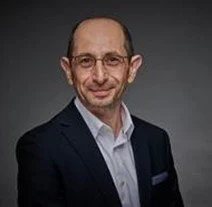
Professor Youssef Hashash
Professor Youssef Hashash holds a B.S. (1987), an M.S. (1988) and a Ph.D. (1992) in civil engineering from the Massachusetts Institute of Technology. He began his career with the PB/MK TEAM in Dallas on the Superconducting Super Collider Project. In 1994 he joined Parsons Brinckerhoff in San Francisco and worked on a number of underground construction projects in the U.S. and Canada including the Boston Central Artery/Tunnel project.
Professor Hashash joined the faculty of the Department of Civil and Environmental Engineering at the University of Illinois at Urbana-Champaign in 1998. He teaches courses in Geotechnical Engineering, Numerical Modeling in Geomechanics, Geotechnical Earthquake Engineering, Tunneling in Soil and Rock, and Excavation and Support Systems. His research focus includes deep excavations and tunneling in urban areas, earthquake engineering, continuum and discrete element modeling and soil-structure interaction as well as resiliency and sustainability of the built infrastructure. He also works on geotechnical engineering applications of deep learning, artificial intelligence, visualization, augmented reality, imaging and drone technologies. He has published numerous journal articles and is co-inventor on four patents. His research group developed the software program DEEPSOIL that is used worldwide for evaluation of soil response to earthquake shaking. His work on seismic design of underground structures is extensively used in engineering practice. He is the geotechnical co-leader of the NIST (National Institute of Standards and Technology) led investigation into the Champlain Towers South Collapse in Surfside, Florida.
Professor Hashash is a Fellow of the American Society of Civil Engineers (ASCE), a past president of the Geo-institute of ASCE and has received a number of teaching, university and professional awards including the Presidential Early Career Award for Scientists and Engineers and the ASCE 2014 Peck medal. He was elected to the National Academy of Engineering in 2022.
In collaboration with Rocscience: Dylan Centella & Alireza Afkhami
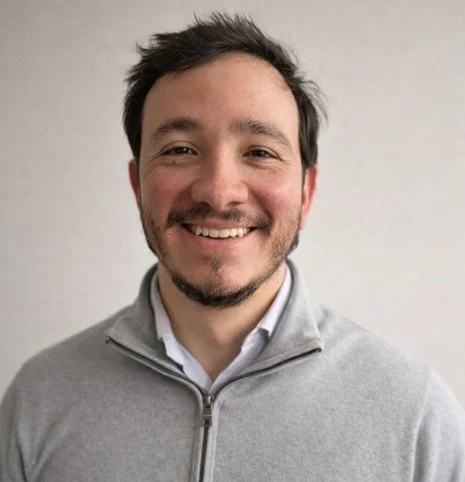
Dylan Centella
Dylan Centella is a Ph.D. candidate in Geotechnical Engineering at the University of Illinois Urbana-Champaign and is currently engaged in the development and enhancement of RSSeismic at Rocscience. His research focuses on advancing 3D nonlinear site response analysis, seismic site amplification modeling, and numerical simulations for geotechnical earthquake engineering. He has extensive experience in 3D numerical modeling, soil constitutive models, and full‑stack software development for seismic site response analysis. His industry experience complements his research through applied site response and soil‑structure interaction analyses on major infrastructure projects.
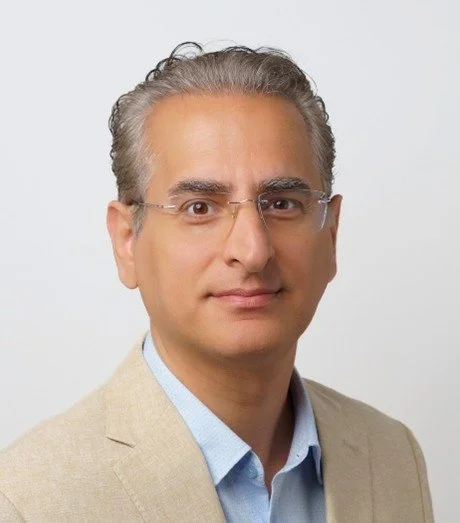
Alireza Afkhami
Alireza Afkhami is Senior Director of Web Applications at Rocscience. Prior to joining Rocscience in 2021, Alireza has been working as a Senior Geotechnical Engineer leading several major civil, infrastructure, residential and commercial development projects. His experience involved site characterization, pile design, seismic assessments, and ground improvement for over 25 years. Alireza has been in charge of Rocscience' borehole data management software "RSLog" since its inception. He co-founded Novo Tech Software in 2009 that was acquired by Rocscience in 2021.
Guest Speakers: Roberto Olivera & Chris Weech
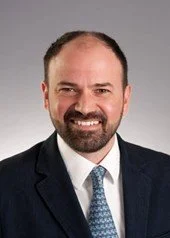
Dr. Roberto Olivera
Dr. Roberto Olivera holds a PhD in Civil Engineering (2004) from the University of Waterloo with a specialization in Micromechanics of Undrained Granular Media. Dr. Olivera has held positions as Geotechnical laboratory manager for Golder Associates (2005-2009) and as Senior Geotechnical Engineer for Golder Associates (2005- to 2020). He is currently a Principal with WSP in Vancouver, Canada. Dr. Olivera has participated in over a hundred projects providing geotechnical engineering consulting to the oil and gas, mining, offshore, dams and civil infrastructure industry in Canada and internationally.
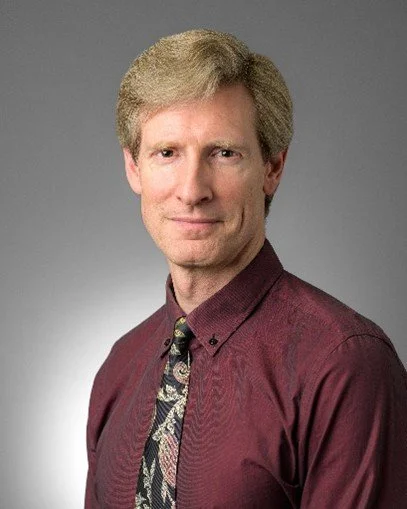
Chris Weech
Chris Weech graduated with a Bachelor of Applied Science in Civil Engineering from the University of Waterloo in 1996 and completed a Master of Applied Science in Geotechnical Engineering from the University of British Columbia in 2002. He is a senior geotechnical engineer with 28 years of experience and an Associate with Thurber Engineering in Victoria. He is currently a member of the Task Group on Seismicity and Site Amplification for the 2025 and 2030 editions of the National Building Code of Canada. He has also been a member of the Technical Review Board for the Seismic Retrofit Guidelines for Low Rise Buildings in BC since 2020. In that role, he has been co-leading the team that is developing ground response analysis procedures that are compatible with the probabilistic treatment of site amplification within the 6th Generation Seismic Hazard Model of Canada.
Registration:
Please visit this link for more details on registration and fees.